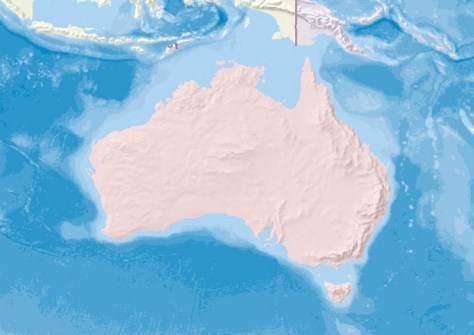
The University of Western Australia’s (UWA) Oceans Institute has become the latest partner to sign up to the Seabed 2030 project.
Established in 2010, the UWA Oceans Institute is a multidisciplinary marine research hub focused on advancing ocean science and addressing critical marine challenges.
The Institute condenses the research efforts of a community of more than 400 experts working in a range of disciplines, such as oceanography, biology, ecology, engineering and the social sciences.
Seabed 2030 has set itself an ambitious goal of surveying the seafloors of all world’s oceans before the end of the decade.
“We are delighted to welcome the UWA Oceans Institute as the latest partner of Seabed 2030,” said Seabed 2030 Director, Jamie McMichael-Phillips.
“The Institute’s multidisciplinary approach to ocean science and its strong international research network make it an important contributor to advancing global knowledge of the marine environment.”
The aims of the UWA Oceans Institute
Based in Western Australia and working across the Indian Ocean region and beyond, the UWA Oceans Institute:
- collaborates with government, industry, research institutions and communities, and
- translates scientific knowledge into practical outcomes that support environmental sustainability, economic opportunity and a thriving blue economy.
Its strategic priorities include:
- strengthening coastal resilience to climate change
- monitoring ecosystem health
- embedding First Nations knowledge, and
- advancing sustainable development.
“The UWA Oceans Institute is committed to advancing collaborative, multidisciplinary marine research that addresses complex ocean challenges,” said the Director of the UWA Oceans Institute, Professor Christophe Gaudin.
“Through this partnership with Seabed 2030, we look forward to contributing our expertise and working together to deepen understanding of ocean systems and support sustainable solutions for the future of the ocean.”
All data collected and shared with the Seabed 2030 project is freely and publicly available in the GEBCO global grid.