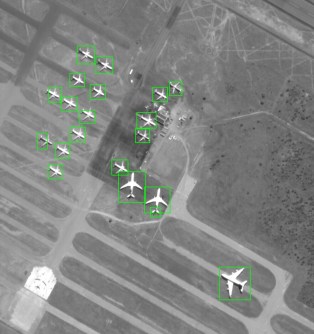
Planet Labs chose Alice Springs for a test of its new satellite on-board AI system.
On 25 March, one of the company’s Pelican-4 satellites captured an image of the central Australian city from an altitude of 500 kilometres.
That image was then processed aboard the satellite using an AI system founded on an NVIDIA Jetson Orin module, resulting in the almost immediate identification of aircraft at the city’s airport.
This is not the first, but it is definitely one of the first times that a commercial Earth imaging satellite has moved beyond pure data capture to on-board AI inference and analysis.
“This success is a glimpse into the future of what we call Planetary Intelligence at scale,” said Kiruthika Devaraj, VP of Avionics & Spacecraft Technology.
“By running AI at the edge on the NVIDIA Jetson platform, we can help reduce the time between ‘seeing’ a change on Earth and a customer ‘acting’ on it, while simultaneously minimising downlink latency and cost.
“This shift toward integrated AI at the edge is a technological leap that can help differentiate solutions like Planet’s Global Monitoring Service (GMS), providing valuable insights for our customers and enabling rapid response times when it matters most.”
End-to-end process
Planet Labs says the development “can help progress Planet’s Pelican and forthcoming Owl constellations into a near-real-time intelligence network”.
The company says that by leveraging NVIDIA Jetson and high-speed inter-satellite links, it is “working to effectively close the latency gap”.
The end-to-end process, spanning initial data generation, deep-net object detection and full geo-rectification, is designed to happen entirely on orbit.
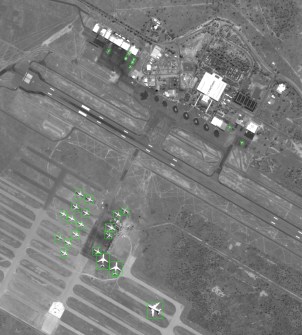
Planet Labs says that by producing GeoTIFF and GeoJSON insights within isolated Docker containers in space, it hopes to be able to generate intelligence about Earth surface events in minutes.
As Spatial Source reported last month, Planet Labs and NVIDIA have also signed a deal to use NVIDIA’s GPU technologies to accelerate the processing and analysis of satellite imagery.
“By developing a GPU-native AI engine, we are unlocking the full potential of our petabyte-scale archive, delivering orders of magnitude speed improvements and physics-informed generative AI products that were previously impossible,” said Will Marshall, Co-founder and CEO of Planet.