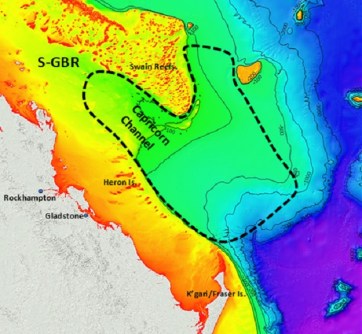
A team of Australian researchers has revealed new insights into the evolution, history and future of the southern Great Barrier Reef.
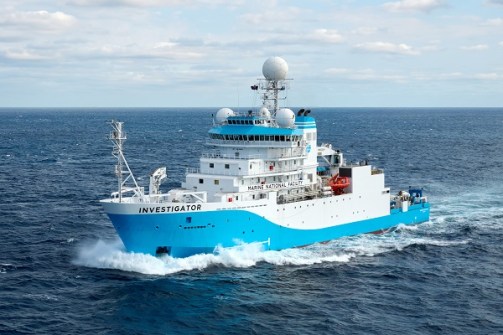
The results come from studies led by The University of Queensland during a 24-day Great Barrier Reef voyage aboard CSIRO’s research vessel (RV) Investigator.
The research was co-designed with the Darumbal Traditional Owners of Sea Country and their close neighbour the Woppaburra people.
The work has revealed landscapes where First Nations people lived on what is now the southern Great Barrier Reef, long before the region was submerged when sea levels rose to present levels around 7,000 years ago.
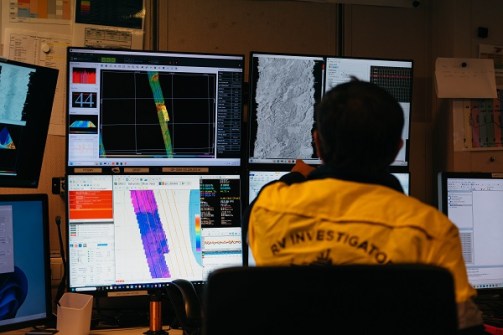
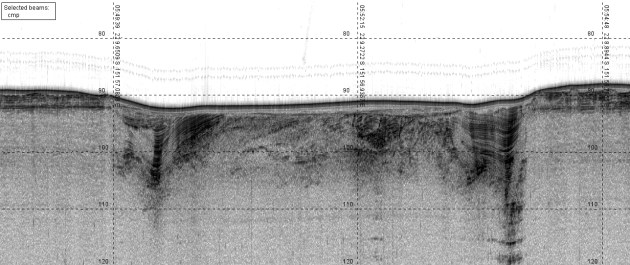
The research team has produced intricate maps of the seafloor and sub-seafloor using RV Investigator’s advanced bathymetric systems.
“First Nations people arrived in Australia over 65,000 years ago when sea levels were 80 metres below present day,” said Voyage Chief Scientist, Professor Helen Bostock from The University of Queensland.
“At that time, the Great Barrier Reef area was a vast coastal plain bordered by towering forests that stretched inland.
“Our research has revealed submerged rivers, lakes, estuaries and beaches in stunning detail and helps tell the story of the First Nations people who lived on this land in times past.”
Filling in knowledge gaps
To reconstruct past conditions, the research team collected more than 20 sediment cores which will be examined to determine the types of sediments and fossils they contain.
This will enable the researchers to reconstruct the historical climate, sea level rise, vegetation and evolution of the southern Great Barrier Reef in a process called paleo environmental reconstruction.
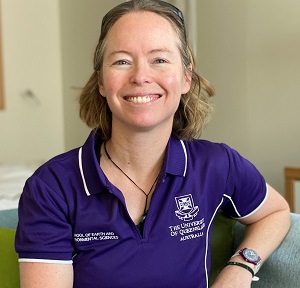
“Seafloor sediments act like time capsules and allow us to reconstruct the history of the region, from its past as a wide coastal plain to the development of the modern Great Barrier Reef, and connect this with the cultural stories of the Darumbal people and their close neighbours the Woppaburra people,” said Professor Bostock.
“This research will fill important knowledge gaps identified in the Great Barrier Reef Marine Park Authority 2024 Outlook Report and contribute to the Reef 2050 Plan.”
Connecting with land and sea country
The voyage team included Land and Sea Country Rangers from the Darumbal and Woppaburra Traditional Owner groups. They worked with other researchers to connect scientific findings with their cultural knowledge and songlines.
Land and Sea Country Ranger Nataliah Backo from the Darumbal people said the research gives them a deeper connection to their history, ancestors and the stories held beneath the ocean.
“We hope this journey makes our families, ancestors and the Darumbal people proud, while creating stronger pathways for our younger generations to continue caring for and protecting our Land and Sea Country,” Ms Backo said.
Echoing these words, Land and Sea Country Ranger Tshinta Barney from the Woppaburra people said she feels “truly blessed to have had the opportunity to learn about the different aspects involved in mapping and understanding the evolution of Sea Country”.