Planet Labs has announced a deal with NVIDIA to use the latter’s GPU technologies to accelerate the processing and analysis of satellite imagery.
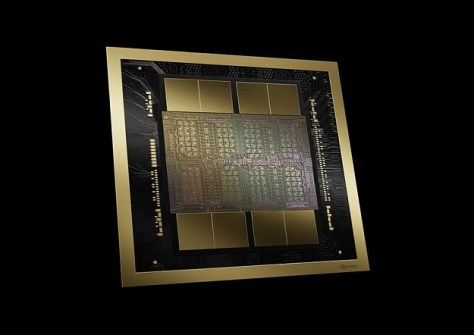
According to Planet, it will use NVIDIA’s Blackwell and NVIDIA IGX Thor platforms to transform raw pixels into analysis-ready insights in a seconds instead of hours.
“Planet is solving a massive, planetary-scale data problem by imaging the Earth every single day,” said Will Marshall, Co-founder and CEO of Planet.
“The traditional methods of batch processing on legacy CPUs can no longer scale with the speed of global change.
“By developing a GPU-native AI engine, we are unlocking the full potential of our petabyte-scale archive, delivering orders of magnitude speed improvements and physics-informed generative AI products that were previously impossible.”
A ‘vector map’ of the Earth
The collaboration will entail three endeavours.
The first will be pipeline acceleration, where Planet will work with NVIDIA to demonstrate how its GPUs can speed the ‘heavy lifting’ parts of satellite data ground processing — such as compositing, orthorectification and atmospheric compensation.
This processing can take place anywhere in the ‘stack’ — in the cloud, at ground stations, or in space on the NVIDIA IGX Thor platform.
The second part will see Planet apply NVIDIA CorrDiff, a generative AI diffusion model, to its PlanetScope imagery archive to unlock super-resolution capabilities.
The third component will see the two companies define new architectures to convert the entire planet’s daily data stream into a multi-dimensional ‘vector map’ of the Earth.
“The integration of NVIDIA AI infrastructure with Planet’s petabyte-scale imagery is driving a fundamental shift in geospatial intelligence,” said Dion Harris, senior director of HPC and AI infrastructure at NVIDIA.