Young professionals are the future of Australia’s geospatial sector.
From GIS to land surveying, from remote sensing to hydrography, from digital twins to reality capture… our sector has an urgent need for many more highly skilled, highly trained workers.
But so many potential members of the sector are unaware that it even exists, or what the career options are.
In our new Young Professionals interview series, Spatial Source aims to help raise the profile of geospatial careers by showcasing some of the talented individuals joining the ranks.
In this interview, we speak with Sijan Bhandari. Sijan was born in Pyuthan District, Nepal, and grew up in Nepalgunj, a major trade hub in western Nepal. For his higher secondary education, he moved to Telangana, India, before returning to Nepal to complete his undergraduate degree in Dhulikhel, near Nepal’s capital, Kathmandu. In 2022, he came to Australia to pursue further postgraduate study.
Please tell us a bit about your background
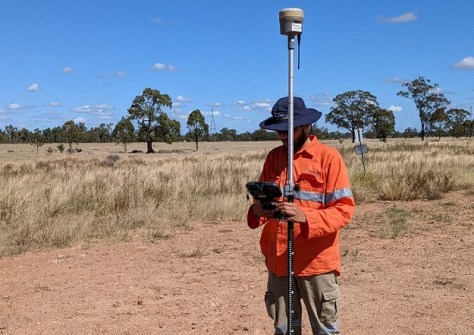
I am a surveyor with more than five years of professional experience across several sectors, including mine surveying in the oil and gas industry in southwestern Queensland, hard-rock open-cut mining in New South Wales, large-scale construction surveying in central Queensland, cadastral surveying in regional Queensland, and informal land surveying in Nepal.
I am also actively involved in the professional community. I am a member of the Asia–Pacific region of the Young Surveyors Network of the International Federation of Surveyors and previously served as Deputy Chair of the Young and Emerging Professionals Committee of the Geospatial Council of Australia.
When, where and which geospatial discipline did you study?
I commenced my four-year undergraduate study in 2016 and completed a Bachelor of Geomatics Engineering at Kathmandu University in 2020. Following graduation, I worked as a geomatics engineer/surveyor in Nepal for approximately one and a half years.
In 2022, I moved to Australia as an international student to pursue a Master by Research in Surveying/Geomatics Engineering at the University of Southern Queensland within the School of Surveying and Built Environment, which I completed in 2024.
My master’s thesis, titled ‘Spatially Enabled Digital Twin Framework for the Field Design Process of Oil and Gas Projects,’ resulted in the publication of two Q1 scholarly journal articles. In recognition of this work, I was honoured with a 2024 Geospatial Excellence Award in the postgraduate student category.
Why did you decide to study this? What was the attraction?
The surveying industry is not a common career choice for many young people, and this was also true for me when I began my undergraduate study a decade ago. My interest in this field was initially influenced by my uncle, who was a surveyor and who suggested I pursue a degree in geomatics engineering.
Additionally, Kathmandu University, in collaboration with the Land Management Training Centre (LMTC) under the Ministry of Land Management, Poverty Alleviation and Cooperatives, offered a scholarship for meritorious candidates, which was another key factor in my decision.
As for my postgraduate study, I first connected with the University of Southern Queensland during an international conference held at LMTC in 2019, where one of their professors was present. This connection, along with UniSQ’s global reputation for excellence in surveying education, inspired me to pursue a Master by Research there.
Where are you working now?
I am currently working at Seam Spatial as a mine surveyor (open pit) at the Cowal mine site, operated by Evolution Mining. Previously, I worked with Vision Surveys and DSQ Land Surveyors. During my time at DSQ, I developed from a young, aspiring surveyor into a fully professional surveyor.
I hold a deep appreciation and respect for the experience I gained at DSQ, as it exposed me to a wide range of surveying skills and helped build the foundation of my professional skills.
What do you enjoy about working in this field?
I really enjoy working in the surveying field because it offers a dynamic balance between fieldwork and office-based tasks. I am also passionate about emerging technologies, such as UAVs, AI, and spatial digital twins, which are transforming how we approach surveying.
Being able to integrate traditional surveying skills with these advanced tools makes the work both challenging and highly rewarding.
What are your career ambitions?
Professionally, my current goal is to become a registered surveyor, and I am in the process of obtaining registration with the Surveyors Board of Queensland.
Academically, I am also interested in pursuing a PhD in the future, with the aim of returning to the university sector once I have gained further professional experience. This would allow me to contribute to both research and teaching in surveying and geomatics while staying engaged with emerging technologies in the field.
What advice would you give to a young person considering a geospatial career?
Geospatial careers are often not well-known, both globally and here in Australia. However, they are in high demand, particularly in regions like Queensland, where rapid infrastructure development is underway. There is a shortage of qualified surveyors to support these projects, making this an excellent career opportunity.
I would highly encourage young students, especially those in high school, to consider pursuing a career in surveying and geomatics. It is a field that combines technology, problem-solving, and real-world impact, offering both professional growth and job security.
Do you know of any young professionals in the geospatial sector who would make great candidates for our interview series? Please get in touch with us.