Welcome to Spatial Source’s International Women’s Day 2026 interview series.
We’re celebrating International Women’s Day 2026 by showcasing some of the outstanding individuals who are helping to shape Australia’s geospatial sector.
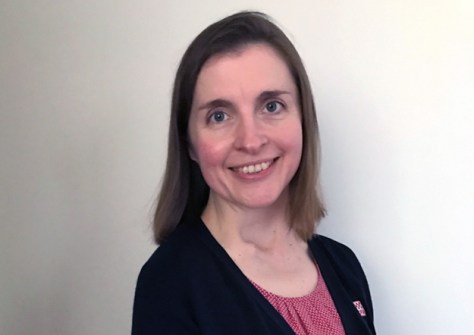
In this interview we speak with Danielle Wright, a remote sensing analyst with Victoria’s Country Fire Authority.
How did you get into this field and what attracted you to it?
I started at Monash University in science and arts. I wasn’t sure about my exact career path at first, but I figured out that I love geography. So, geography and environmental science became my major. I completed honours in the geography sub-discipline of climatology.
After honours, I completed my PhD in geospatial science at RMIT University and the Bureau of Meteorology. My PhD research, supported by the Bushfire Cooperative Research Centre, entailed the development of a satellite model to monitor the drying out of grasslands (known as grassland curing). The purpose of this model was to support fire danger calculations for fire behaviour modelling, readiness and the fire danger ratings.
After my PhD, I worked as a GIS Officer for the Victorian Department of Sustainability and Environment. I then landed a job with the Country Fire Authority (CFA), where I continued further work in satellite remote sensing and grassland curing.
Please tell us about your current role and responsibilities.
I work in CFA’s research and development team as a remote sensing analyst. My work focuses on the research, development and support of satellite products and models which monitor grass fuel conditions, grass fuel-based fire danger calculations, and water availability.
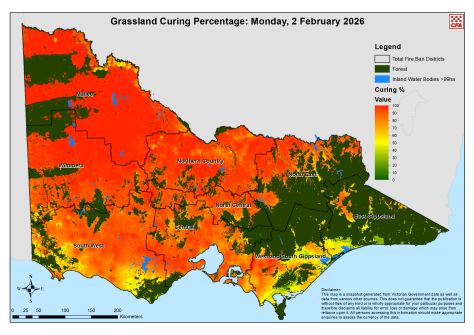
My main area of work has been the development of a combined ground-based and satellite-based grassland curing model which monitors the drying out of grass for each 500m pixel across the landscape. This model is used operationally across Australia for fire danger calculations.
What do you enjoy most about your job/studies?
I specialise in remote sensing and the drying out of grass — you could say that I watch grass grow! And this may not sound enjoyable, but I love my job. I love working with spatial datasets and then extracting data for analysis. Also, we’re constantly making improvements to grass fire danger calculations, which is always interesting and challenging. And I feel like I’m achieving something important through my work and making a worthwhile contribution.
What makes you most proud about your role and achievements?
I’m extremely proud to be a part of the CFA Research and Development team. Our team is involved in over 40 research and development projects. These vary from projects that better determine our risks in relation to fire and climate, to quantifying our suppression effectiveness to optimise operations, understanding communities to improve how we engage with them, and supporting and developing innovative tools, data and systems to support our members in decision making.
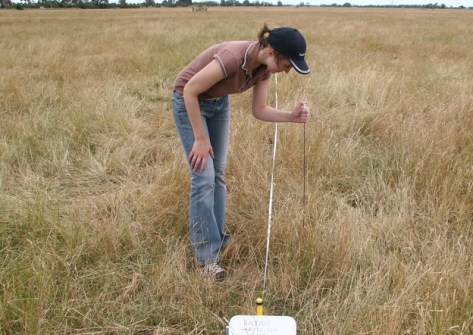
Each member of the research and development team is a well-respected research scientist bringing a distinct area of expertise to our work.
As a woman, have you had any struggles during your career? Conversely, have you had support?
During my career, I have never experienced any struggles owing to my gender. I have always been surrounded by support and respect. Having said that, managing cycles while doing fieldwork with no bathroom facilities nearby is not fun. I look forward to the day when this type of question would only be relevant in the past tense and not the present.