Welcome to Spatial Source’s International Women’s Day 2026 interview series.
We’re celebrating International Women’s Day 2026 by showcasing some of the outstanding individuals who are helping to shape Australia’s geospatial sector.
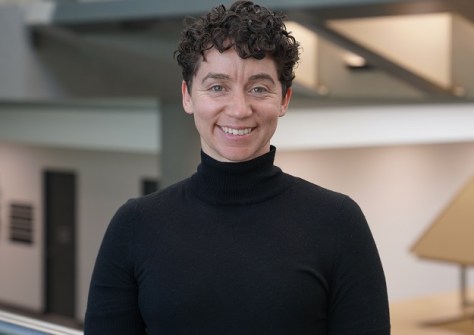
In this interview we speak with Leyla Alpaslan about her fascinating career trajectory, and how she became Head of Geoscience Australia’s Digital Earth Branch.
How did you get into this field and what attracted you to it?
After studying science and law at university, with a focus on international environment law, I decided to join the Army to gain real world experience on the pure international side of things. I first worked in logistics while finishing my post graduate legal studies, and then as a Legal Officer.
In these roles I worked closely with strategic and operational decision makers across nations. I witnessed the importance of data-driven decision-making and how it can be the difference between a great or ‘not as great’ outcome.
On leaving the Army after 15 years, I transferred to the Australian Public Service to continue my work in civilian clothing. At each step in my career, I found myself choosing opportunities and roles that brought me closer and closer to decision-enabling data production, and eventually to the world of spatial data production.
I took my newfound passion to the private sector to expand my experience, and when I saw my current role advertised, I knew I had to apply. My job at Geoscience Australia lets me utilise all the skills and lessons I have learnt through my whole career and teaches me new ones every day.
What are your current role and responsibilities?
I joined Geoscience Australia in October 2024 to lead the Digital Earth Branch. I am proud to lead our diverse team of data scientists, engagement officers, ICT specialists and more. Together, Digital Earth Branch delivers high-value satellite-derived data and analysis to Australian governments, industry and communities to make decisions on our environment.
Our data archive spans over 35 years, enabling not only environment classification but also multi-decadal change detection across our land, water and coastal environments. We have also played a key role in bringing the benefits of Earth observation to Africa, and we have recently been appointed the long-term host of the Digital Earth Africa program to the non-profit organisation International Centre of Insect Physiology and Ecology, in Kenya.
Excitingly, the Branch is also now expanding its geographical reach to Antarctica — yes, we are mapping penguins from space!
One of the things I like most about my role is that we partner with international satellite operators, Commonwealth and state government agencies, the research sector, and industry to deliver our outcomes.
We need more women in the geospatial sector. Do you have any ideas?
“You can’t be what you can’t see.” Celebrating and sharing the diverse stories of women in the geospatial sector is critical. Women are absolutely nailing it all the way up the leadership ladder and across government, industry and research. We are innovating, driving change and using geospatial data to solve key environmental and societal challenges.
Our success in this sector is not rare — it is now the norm. Get the word out!
As a woman, have you had any struggles during your career? Conversely, have you had support?
Quite often in my career I have struggled with trying to make the whole career/life balancing act work. As many know, managing family, children, general life surprises, passion projects and trying to build a career that empowers can be hard. To top it off, opportunities and challenging times for me never seemed to space themselves out.
I have been incredibly fortunate to have had great leaders and managers who supported me — not just helping me create space to get a reasonable balance, but also teaching me that career paths do not always have to be linear or pre-determined. I will be forever grateful for the women who have come before me and worked so hard to change the perception of a what a ‘typical’ woman in the workforce looks like or the options she ‘should’ pursue.
Don’t get me wrong; there is still a way to go, but there are increasing opportunities and momentum for us to forge our own new pathways.
What would you say to women who are considering a role in geospatial?
Do it! Careers in geospatial offer opportunities across so many fields — health, environment, urban planning, renewable energy, mining and resources just to name a few. Through delivering and working with such a critical data set, you will be at the forefront of positive change and innovation.