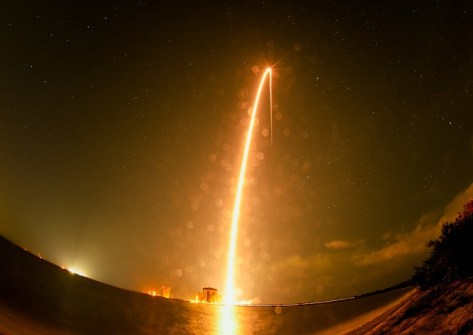
The last of the GPS III-series satellites for the U.S. Space Force was launched this week.
Spacecraft SV10 was rocketed into space from launch pad 40 at the Cape Canaveral Space Force Station on Tuesday aboard a SpaceX Falcon 9 launch vehicle.
SV10 is undergoing routine checks and being managed by Lockheed Martin’s Launch & Checkout Operations Center prior to being fully commissioned into the GPS network.
The satellite had originally been due for launch aboard a United Launch Alliance (ULA) Vulcan rocket but, following problems with boosters on two recent Vulcan launches, the US Space Systems Command decided to switch at fairly short notice to SpaceX.
The US Space Force has an agreement with both launch providers whereby payloads can be swapped from one to the other if the need arises, with the company that misses out being compensated by the re-assignment of a later payload.
In this case, ULA has now been allocated a different military satellite for launch in mid-2028, which had originally been assigned to SpaceX.
Upgraded resilience
GPS III satellites are said to provide three times greater accuracy and eight times stronger anti-jamming capability compared to their earlier generation predecessors.
According to Lockheed Martin, the addition of the final GPS III satellite to the network will bring “major upgrades in constellation resilience and accuracy”.
This includes a crosslink payload demonstration unit that will test optical communications directly between GPS satellites.
In addition, the satellite is equipped with a demonstration Digital Rubidium Atomic Frequency Standard clock, which the company hopes will lead to time-keeping capabilities that are even more reliable and precise.
“The final GPS III deployment is an important milestone as we continue strengthening the GPS constellation,” said Fang Qian, vice president of GPS at Lockheed Martin.
“By launching SV10 into orbit, we’re not only adding to the resiliency of today’s GPS capabilities — we’re opening the door to the next generation of GPS IIIF satellites that will provide greater resiliency and serve as the backbone of the GPS constellation for years to come.”
Higher performance
According to Lockheed Martin, the forthcoming advanced GPS IIIF series will have stronger anti-jamming capabilities for military users, as well as further improvements for civilian users. The company counts the latter at six billion worldwide.
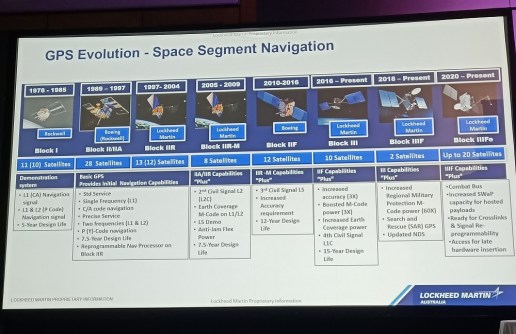
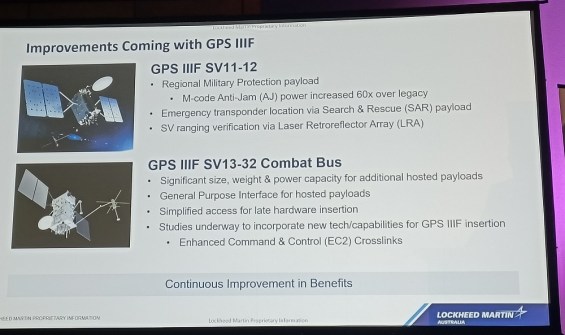
Specifically, GPS IIIF will feature Regional Military Protection, which Lockheed Martin says will bring a more-than 60-fold boost in anti-jamming performance for military purposes.
The company is under contract to build 12 GPS IIIF satellites and is using technology such as augmented reality and digital twins to accelerate production.
See also:
Four firms chosen for resilient GPS program