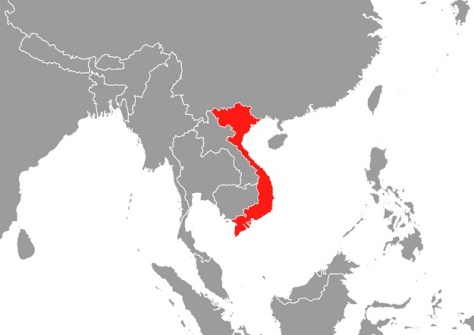
The government of Vietnam has ordered officials to accelerate work on the nation’s land administration system by completing the digitisation of the national land database by the end of 2026.
The work comes under an official directive to (translated) “…complete the surveying, statistics, digitisation, and cleaning of the land data system nationwide by the end of 2026, connecting and sharing it with other national data systems”.
The effort builds on a 90-day sprint from 1 September to 30 November last year to clean and ‘enrich’ the country’s land data.
But there is still a lot of work to be done.
The data gap
Official data from February 2026 shows that there were approximately 106 million land parcels nationwide in Vietnam, with data held on just over 62 million of them.
- 23.5 million parcels meet the ‘correct, complete, clean’ data standard;
- 38.9 million parcels did not meet that criterion; and
- 43.2 million parcels are not yet in the database.
At the end of April, the Ministry of Agriculture and Environment issued a circular setting out:
- Regulations for the integration of cadastral surveying, mapping and record keeping, plus land registration and the land database;
- Requirements for developing technical guidance documents;
- Formalisation of guidance on linking land use rights certificate data and ownership of assets attached to the land.
Deadlines and next steps
Already, 32 out of 34 provinces and cities across Vietnam have set up committees and working groups and have issued plans of work that have added another 500,000 parcels to the ‘correct, complete, clean’ list.
The country’s Deputy Prime Minister has asked all involved parties to ensure that the implementation timeline does not become delayed and that the end-of-year target is attained.
The Deputy Prime Minister also asked the ministries of Natural Resources and Environment, Public Security, and Science and Technology to work together to ensure the land data is linked to and verified within the national population database.
This includes ensuring adherence to unified technical standards to enable the sharing and integration of data across the nation.