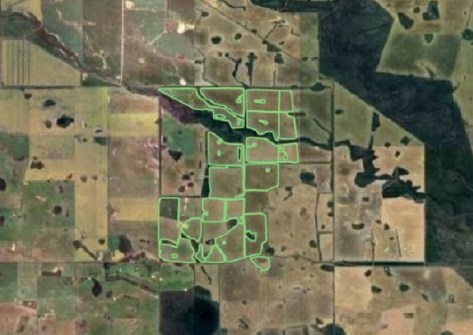
Paddock-level analysis of data has revealed a move away from longer-term grazing enterprises into cropping across multiple regions of Australia.
The analysis, conducted by Digital Agriculture Services (DAS), indicates that nearly 1 million hectares of pasture have been converted to crops over the past two winter seasons.
The insight builds on a structural shift in land use that the company says it has been tracking since 2020.
DAS says that it combined “… geospatial analytics, AI and machine learning with satellite imagery and ground-truth data to map broadacre paddocks and track land-use and crop attributes over time”.
“Australia’s land-use picture has often been limited by coarse resolution, infrequent updates and time lags,” the company says in a report on the issue.
“Advances in geospatial and AI-enabled analytics are narrowing that gap, improving transparency and strengthening decision-making across industry and government.”
Long-term shift
According to DAS, while the federal government’s live sheep export ban has added uncertainty for some producers, the data points to a longer-term, multi-factor shift in how Australian farmland is being used.
The company’s CEO, Anthony Willmott, says the land-use trend reflects a combination of technological advancement, industry restructuring and stronger cropping profitability.
“We can now see, paddock by paddock, where grazing country has already moved into wheat, barley or canola — and where that change is likely to accelerate in the years ahead,” he said.
“Our analysis suggests this isn’t just a short-term reaction to one policy decision. It’s a structural shift supported by better drainage, better varieties and better agronomy, combined with changing ownership and a long-running decline in sheep numbers in some regions.”
Western Australia and New South Wales account for more than two-thirds of the recent change, with Western Australia alone adding around 120,000 hectares of newly cropped land this season and helping push Australia’s total winter crop area beyond 23 million hectares.
DAS analysts say that much of the change appears to be driven by land sales and new ownership, rather than existing farmers simply pivoting overnight.
A broad decline in the sheep industry is pushing some landholders out of grazing enterprises, while improved cropping margins are encouraging a general move away from livestock in many areas.