Young professionals are the future of Australia’s geospatial sector.
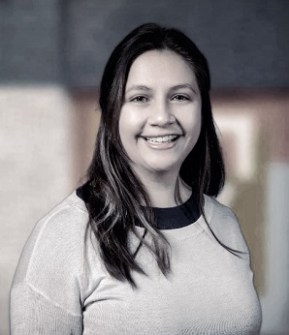
Continuing our series of interviews with up-and-coming and early career professionals in the Australasian geospatial community, this week we speak with Ari Comben.
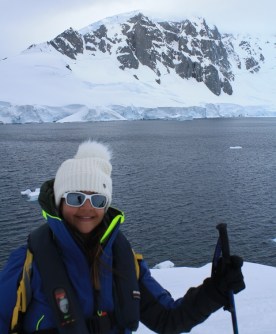
Comben hails originally from a small town in Mexico, but these days uses her GIS skills to help Australian communities stay safe before, during and after natural disasters.
She says that her travel-loving father passed on to her his sense of adventure, while her mother “gave me the confidence to believe that I could go out into the world and achieve whatever I set my mind to”.
Please tell us a bit about your background.
In high school, I had numerous interests, all the way from arts to business. Choosing a degree felt impossible. None of the typical options appealed to me. One day, while browsing online, I came across an Australian university offering a degree in aquaculture that instantly grabbed my attention. I ended up finding a similar program in Mexico and studied biotechnology in aquaculture.
I’ve been fortunate to receive several scholarships and awards that opened doors to amazing opportunities in Germany, Chile and eventually Australia. It’s been a windy road, one that ultimately led me to discover the geospatial world.
When, where and which geospatial discipline did you study?
I studied a Master of Marine Science and Management at Macquarie University about ten years ago. As part of the program, I took the core GIS and remote sensing courses, and because I had already developed an interest in GIS through my previous job, I also elected to become involved in a research project using remote sensing.
It was a slow transition into GIS for me. Whilst I had been aware of GIS since my undergrad, it wasn’t until I gained more experience during my first job that I realised how instrumental GIS was. That curiosity kept growing, and my master’s became the perfect way to explore geospatial sciences.
Why did you decide to study this? What was the attraction?
I decided to study my master’s in marine science as it was a natural pathway from my undergrad and job at the time. Whilst I have always loved the marine environment, instead of continuing to pursue a career in this field, I found myself increasingly drawn to GIS because of how interconnected everything is. It can be applied anywhere and to many other disciplines, helping us make sense of huge amounts of data that we wouldn’t understand otherwise, plus making cool maps and web applications was fun.
Where are you working now?
I’m currently working at the NSW Reconstruction Authority where we help communities prepare for disasters by reducing risk where we can and adapting where we can’t. As such, when disasters do inevitably happen, we are better prepared, recovery is faster and we minimise risk to communities. We work closely with other government departments, emergency services and local communities, especially as disasters sadly become more frequent and severe.
What do you enjoy about working in this field?
I find it fascinating that by combining natural hazard data with other variables, we can model different scenarios, understand climate change-related impacts, and figure out which areas and infrastructure are most important for keeping communities safe.
I feel like I am having a meaningful impact and I’m really passionate about using the technology we have to support growth while remembering that natural hazards are part of nature, but disasters are not. I genuinely believe we can build communities where people feel safe, can thrive, and where our impact on the environment is reduced rather than amplified.
What are your career ambitions?
My career ambition isn’t tied to a specific job title, it’s centred on impact. I want to help more people understand the real effects of climate change and reconnect with nature, because I think that connection is something we’re slowly losing. I believe that when people understand their environment and their footprint, they’re more empowered to take meaningful action.
I’m also passionate about supporting emerging professionals, especially women in the geospatial space. There’s so much talent out there, and I’d like to be someone who encourages, guides and opens doors where I can.
In the long run, I’d love to see spatial thinking become part of everyday work across all industries, used as a standard tool to make better decisions for communities and the planet. Whatever role I’m in, those are the outcomes I want to drive.
What advice would you give to a young person considering a geospatial career?
I’d say that whatever degree you choose is just your starting point, it doesn’t have to define your whole career. One of the best things about geospatial sciences is how broad and flexible it is. You can take it in so many directions, change your mind along the way, explore different specialisations, and apply it to whatever you’re most interested in.
Do you know of a young professional in the geospatial sector who would make a great candidate for our interview series? Please get in touch with us.
You might also like to check out these other interviews with, and articles about, young geospatial professionals: