The NSW Sharing and Enabling Environmental Data (SEED) platform has marked its 10th birthday this year.
Established in 2016 following recommendations from the 2014 Biodiversity Legislation Review and the 2014 Coal Seam Gas Review, SEED was developed to meet the community’s need for accessible and discoverable environmental data and to build public trust in government decisions.
Over the past decade, SEED has evolved into a whole-of-government capability supporting evidence-based decision-making and for providing valuable data for planning, policy, research, regulation and environmental management.
In 2026, users can access more than 6,900 datasets, web maps and data insights from more than 160 organisations through a single platform.
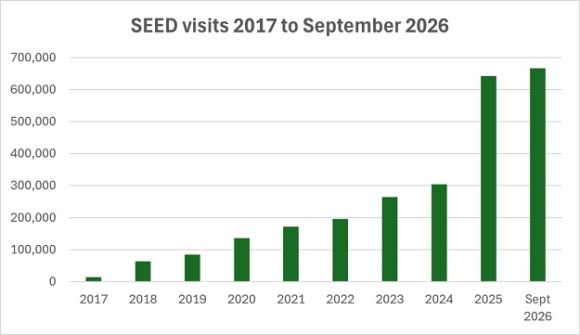
SEED is used by more than 74,000 people each month. Annual use has grown from just over 14,000 visits in 2017 to more than 650,000 in 2026… a 71% year-on-year increase.
The platform supports more than 60 legislative and policy frameworks and has contributed to major environmental initiatives and reviews, including work relating to water data collections and the NSW Government’s Plan for Nature.
User research shows that 92% of users trust SEED as a data source, 100% agree it supports transparency, and more than 70% say it influences their decisions.
A further 94% report that SEED adds value to their work by making information easier to find and reducing duplication.
SEED wins online design award
Another milestone for SEED is its recent win in the Digital Design – Web Design and Development category of the 2026 Australian Good Design Awards.
The award recognises the successful refresh and transformation of SEED’s platform into a more accessible and engaging digital service, making it easier for people to find, understand and use trusted environmental information.
Plus, it recognises the platform’s decade of evolution focused on helping environmental data create real-world value.
According to the Australian Good Design Awards Jury, SEED’s re-design was “a well-considered transformation of a large-scale public environmental data platform”. The jury praised SEED’s success in enabling the translation of complex environmental datasets into “relatable, real-world insights”.
The Jury also highlighted SEED’s ability to democratise access to trusted environmental data and commended its influence in helping communities, councils and policymakers make more informed and transparent decisions.
Related news:
Coastal erosion and habitat data updated on SEED
Enhanced SEED tool brings new dataset functions