The 2026 CEOS Earth Observation Handbook showcases Earth Observation’s role in building global resilience.
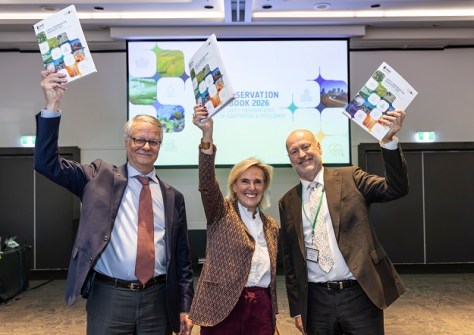
The latest Committee on Earth Observation Satellites (CEOS) Earth Observation Handbook has been launched during the 40th CEOS Plenary in Hobart.
The Handbook showcases some of the many ways in which Earth observation (EO) satellite imagery is giving communities, governments and industries the knowledge they need to adapt to increasing climate and environmental risks, supporting better decisions and strengthening resilience from local to global scales.
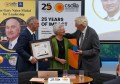
On hand to launch the Handbook were Chief Executive of the CSIRO, Professor Doug Hilton; the CSIRO Centre for Earth Observation’s Chief Scientist, Dr Alex Held; and European Space Agency’s (ESA)Director of Earth Observation Programmes, Simonetta Cheli.
Production of a Handbook is a longstanding traditional contribution to CEOS from ESA, stretching back to the 1990s.
CEOS was chaired Team Australia (CSIRO, Geoscience Australia and the Bureau of Meteorology) during 2026, with the three agencies helping to solidify adaptation and resilience as a strategic priority throughout the year.
The 2026 edition of the Handbook reflects that theme, showcasing a global spread of 44 real-world case studies across agriculture, disasters, infrastructure, ecosystems, health, and water.
Local examples include CSIRO’s work supporting ecosystem resilience through the Habitat Condition Assessment System, Green Adelaide using EO to manage tree canopy coverage to tackle the effects of urban heating, and a case study of adaptation to coastal change in Tuvalu.
You can read the Handbook online here.
Related reading:
Team Australia takes the helm at CEOS
Q&A with Alex Held on Australia’s CEOS role