
Ed Parsons opines on the evolution of AI in geospatial, and why it will soon become the new normal.
By Ed Parsons
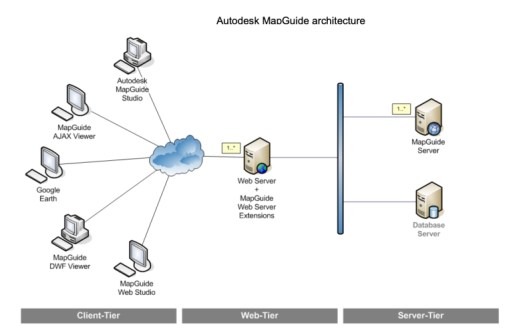
Remember WebGIS? The term itself feels a little anachronistic now, doesn’t it? It conjures images of a distinct, almost revolutionary movement, a time when putting maps and spatial analysis on the internet was a novel and exciting frontier.
I know; I was there.
Today, the very idea of differentiating WebGIS from ‘GIS’ is almost quaint. Geospatial technology is fundamentally web-enabled. The internet isn’t an add-on; it’s the foundational architecture upon which modern GIS operates. This natural, pervasive integration offers a powerful parallel for understanding the trajectory of another transformative force: Artificial intelligence.
For the past few years, we’ve seen the rise of GeoAI — a term that describes the intersection of AI and geospatial technology and one which I find troubling. (Why do we feel compelled to put ‘Geo’ in front of anything new?) It encompasses everything from machine learning for feature extraction from satellite imagery to deep learning models for predicting urban growth or optimising logistics.
And much like WebGIS before it, GeoAI does however mark a significant paradigm shift. It highlights the new capabilities, the new research directions and the new challenges that emerge when AI is brought to bear on spatial data.
But just as WebGIS eventually faded into the background as web integration became the default, so too will GeoAI likely become a historical term. This isn’t to diminish its importance or the incredible innovations it represents. Quite the opposite. The eventual disappearance of GeoAI from our lexicon will be the ultimate testament to its value.
Think about it: when we talk about GIS now, we inherently assume a web-based infrastructure. We expect interactive maps, cloud-hosted data and collaborative tools that leverage the power of the internet. We don’t append ‘web’ because it’s no longer a distinguishing feature; it’s simply how things are done.
Yes, there are of course a few edge cases where workstations are still used, but the majority of us are sitting in front of a browser most of the day.
The same destiny awaits AI in the geospatial realm. As AI algorithms become more sophisticated, more accessible and more deeply embedded into every facet of geospatial workflows, the need to call it GeoAI will diminish.
We won’t be talking about ‘AI-powered mapping’ as a special category; we’ll simply be talking about ‘mapping,’ with the understanding that intelligent automation and analytical capabilities are an intrinsic part of the process.
Imagine
Imagine a future (well, it’s not really the future ) where a satellite automatically identifies and classifies objects as it orbits, sending back not imagery but processed, intelligent data that is immediately actionable.
Where a city planning model dynamically optimises infrastructure based on real-time traffic, demographic shifts and environmental factors, all powered by unseen AI algorithms.

Where your everyday mapping application provides predictive routing based on learned patterns of congestion and even suggests new points of interest based on your preferences and historical movements.
These are not just ‘AI features’; they are the core functions of a truly intelligent geospatial system.
A journey well-travelled
The journey from WebGIS to just GIS taught us that foundational technological shifts eventually become so pervasive that they shed their distinguishing labels.
They simply become the new normal. GeoAI is currently doing the vital work of pushing boundaries, inspiring innovation, and attracting talent to this exciting interdisciplinary space.
But its greatest legacy will be its own obsolescence — a sign that intelligence has not just intersected with geospatial technology but has become its very fabric.
The future of geospatial isn’t GeoAI; it’s simply geospatial, made infinitely more powerful and insightful by the intelligence woven into its core.
Now if only we could get rid of the term geospatial and go back to using geography!
Ed Parsons is Chair of the Board of Directors of the Open Geospatial Consortium, former Geospatial Technologist with Google, and former (and very first) Chief Technology Officer with the Ordnance Survey. Article republished by permission, from edparsons.com.