As we reported last month, a consortium of Australian science bodies has taken up the helm of the Committee on Earth Observation Satellites (CEOS) for the next 12 months.
The collaboration, made up of the CSIRO, Geoscience Australia and the Bureau of Meteorology will hold the position of Chair of CEOS for the duration 2026.
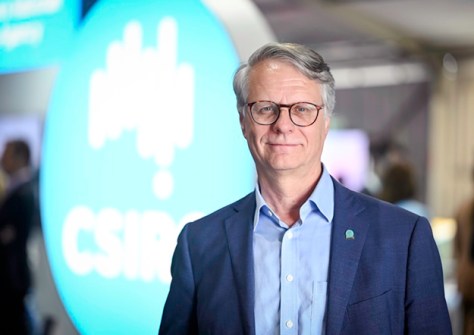
The Chair Team will be led by CSIRO’s Dr Alex Held, who is currently Chief Scientist, Earth Observation & AquaWatch, within CSIRO Space and Astronomy.
We asked Alex for a quick snapshot of what CEOS is all about and what Australia’s lead will mean for it in 2026, including hosting the 40th CEOS Plenary meeting in Hobart in November.
How did Australia come to take the helm at CEOS?
Australia has been a member of CEOS since 1989 via CSIRO, with Geoscience Australia and the Bureau of Meteorology joining in 2013 and 2015, respectively. The three agencies constitute the main government agencies responsible for coordination, research and operational use of Earth Observation data.
The CEOS Chair role rotates every year with geographical rotation, so Team Australia offered to Chair for 2026, which was then fully endorsed by all CEOS members during the Canadian Space Agency Chair Plenary in 2024.
What are Team Australia’s responsibilities?
CEOS Chairs run a multi-agency secretariat that coordinates an agreed work plan for CEOS members to contribute staff and effort to. This work takes the form of several technical working groups and ‘virtual constellation’ teams, made up of experts from the different agencies. The Chair hosts the annual CEOS Plenary, generally towards the end of their term.
What’s so important about CEOS and its activities?
CEOS brings together over 60 global agencies on a ‘best efforts’ basis, to ensure international coordination and advocacy of civil space-based Earth observation programs and capabilities.
This includes ensuring joint efforts on satellite data calibration and validation, data interoperability, as well as high-level engagement and advocacy on the effective use of EO data by multilateral bodies and UN conventions on climate change, disaster, land degradation and sustainable development.
What sort of work will be done in 2026?
EO has been used extensively to monitor the impacts of climate and other environmental change. During the Chair year, we want to shine a light instead on how EO can be used to adapt and build resilience to these impacts, from regional down to local scales.
Will there be events of specific interest for Australians?
The Advancing Earth Observation Forum hosted by Earth Observation Australia late in 2026 will be a key public event that is expected to be aligned somewhat with the CEOS Chair goals, and where the Australian EO community gets to hear more about the work and achievements of CEOS.
What are some challenges facing the EO community, globally and within Australia?
The need for improved linkages and technical coordination between governmental space programs and the commercial sector, for example, are areas where CSIRO is starting to place more effort and attention.
Are there ways in which individuals or groups can become more involved in CEOS?
Key experts and individuals from the university sector, industry or other research organisations in CEOS member countries can be involved in CEOS working groups and virtual constellations.