How Sydney squared off against four other cities to win the rights to hold the 2029 ISPRS Congress, and what comes next.
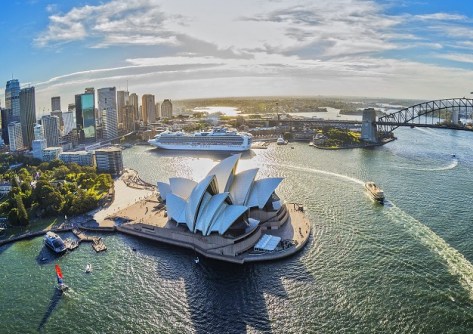
As we reported a couple of weeks ago, Sydney has won the rights to host the 2029 Congress of the International Society for Photogrammetry and Remote Sensing (ISPRS).
This will be only the second time an Australian city will have hosted the Congress, following the event held in Melbourne in 2012.
More recently, a smaller ISPRS Technical Commission symposium was held in Fremantle in October 2024.
Like most major international events hosted in Sydney, the Congress will be held at the International Convention Centre at Darling Harbour in the heart of the city.
It is expected to attract more than 2,000 delegates and generate an estimated $13.8 million in direct revenue for the NSW economy. With those kinds of figures in play, it’s no wonder the bid was supported by Placemaking NSW, Destination NSW and Tourism Australia’s Bid Fund Program.
In charge of the Sydney bid was Petra Helmholz (Curtin University), Sisi Zlatanova (UNSW), Rachel Greenwood (Locus Alliance), and Emma Mogus and the team at Business Events Sydney (BESydney).
“It is a huge and exciting opportunity for Locus Alliance and the remote sensing and photogrammetry community in Australia,” said Greenwood.
“We hope to collaborate and join forces with other like-minded disciplines to put on an exceptional Congress in 2029.”
How the bid was won
To find about more about the behind-the-scenes details of both the bid and what comes next, we put some questions to the bid team members and they answered as a group.
How was the winning city chosen? Was it a vote of ISPRS members, or was the decision made by a selection panel?
It was a competitive bid. The delegates from the ordinary members of ISPRS voted in a secure ballot for the 2029 and 2030 bids. A simple majority was needed. The 2030 voting was done first: the candidates were Sydney, Incheon (South Korea, bidding for the second time), Wuhan (China, also bidding for the second time), Nairobi (Kenya) and Abu Dhabi (UAE). After the first round, the two countries with the most votes were South Korea and Australia. South Korea won in the second round of voting.
That left the 2029 Congress. Australia received 62% of votes immediately and thus won the bid in the first round. The competitors were Wuhan and Nairobi; Incheon had already won 2030 and withdrew its application for 2029, while Abu Dhabi didn’t bid for 2029.
How did you feel when the announcement was made?
Shocked! Especially that we received so many votes in the first round.
How long had you been working on the bid?
Approximately one year. There were fortnightly meetings for the first nine months, followed by weekly meetings in the three months leading up to the Congress and the vote.
Leading up to the Congress, BESydney secured sustainable support from the NSW Government and Tourism Australia. The Congress venue had to be booked. We built a webpage, organised letters of support, and contacted possible local organising committee (LOC) members. We had to write a bid document and create a bid presentation. Thinking back, it was actually a large workload to put a high-quality bid together!
In Toronto, we had a booth to promote the event, we organised a reception, and we had many chats with delegates explaining why Sydney should get the Congress.

What’s the plan from here? What are the next steps?
We must engage a professional conference organiser and organise the LOC. We have a large LOC, but we have to allocate specific tasks such as scientific program lead, tutorial and summer school organisers, sponsorship manager and so on. We want to have several events in parallel, so we must find agreements with these organisations. We also must start to promote the event nationally and internationally.
What can people expect from the 2029 Congress?
A strong focus will be on scientific quality, and being inclusive and diverse — including all levels of researchers (students and professionals) and those from different backgrounds — and to have the Congress serve as a hub for industry and professionals to come together with researchers.
Why is the ISPRS and its Congress relevant for Australia?
Australia has a long and valued history with ISPRS, reflected in decades of scientific leadership, strong research contributions, and the hosting of major ISPRS events. Australian researchers have played an active role in shaping the Society through leadership positions, commission activities, and educational and scientific initiatives.
Hosting the ISPRS Congress in Sydney will build on this legacy while creating new opportunities for collaboration, innovation and knowledge exchange. The Congress will bring together researchers, industry, government and future leaders to address some of the world’s most pressing challenges, including environmental sustainability, disaster resilience and sustainable development.
By connecting global expertise with Australian strengths in geospatial science, remote sensing and photogrammetry, the Congress will help inspire solutions that support communities, protect our environment, and contribute to a more resilient and sustainable future.
Is there anyone you’d like to thank for helping with the bid?
We’d like to thank BESydney, which helped with the bid and the on-the-ground activities in Toronto, plus we’re thankful for the support from the NSW Government and Business Events Australia and Tourism Australia. Plus, all the government agencies, companies and community groups for their letters of support, and the members of the LOC, who right from the beginning put their hands up to be part of the journey.
Is there anything else you’d like to convey?
I (Petra) attended the 2012 Congress in Melbourne, and I truly enjoyed the ‘Australian touch’. We hope to achieve the same, or even more, in a changing world. We hope that we can set a high benchmark for the first annual ISPRS Congress (so far, they have been every four years; starting in 2029, they will be annual). And we hope that many people from Australia, South-East Asia and other countries will attend.