A new suggests the solid Earth’s shape is becoming slightly less flattened, a finding that could be important for research into climate change and other fields.
The study, by C. Kotsakis of the Department of Geodesy and Surveying at the Aristotle University of Thessaloniki in Greece, looked at how the shape of our planet is slowly changing over time.
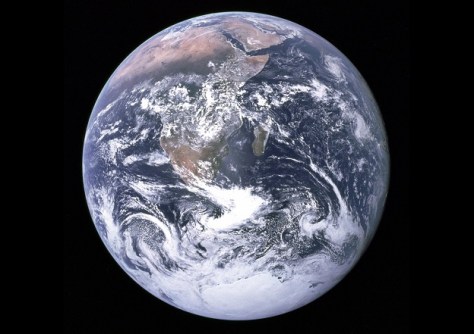
The Earth isn’t a perfect sphere, but rather an oblate spheroid — slightly flattened at the poles and bulging at the equator.
But that shape isn’t fixed; it changes due to natural processes such as melting ice, shifting land, and changes in the Earth’s surface and interior.
“To better understand these changes, we used satellite-based measurements of how the Earth’s surface moves up or down in different places,” the author writes in the study’s paper, which has been published in the journal JGR Solid Earth.
“We developed a method to analyse this data and track whether Earth is becoming more or less flattened over time. Our results indicate an acceleration of polar uplift accompanied by a comparably increasing rate of equatorial subsidence. This means that solid Earth’s overall shape is becoming slightly less flattened.
“We further find that this geometric change is not fully mirrored in the Earth’s gravity field, indicating that the geometric response of the solid Earth and the gravity field response to mass-redistribution do not evolve identically.”
According to the author, the findings are important because they help scientists understand how the planet responds to melting glaciers and shifting water.
“This kind of knowledge is essential for tracking climate change and its impact on Earth’s long-term behaviour.”
Earth’s poles are rising
By linking satellite measurements of changing altitude across Earth’s surface from 1997 to 2015 to the planet’s shape, Kotsakis found that the Earth’s poles are rising by 0.5 to 1 millimetres per year, slowly un-squashing our planet’s slightly flattened shape.
Not only that, but the rounding effect also seems to be accelerating over time, with the poles rising an extra 0.4 millimetres per year faster every decade. As ice sheets melt and reduce the force acting on the Earth at the poles, the equator is gradually cinching in as the poles push upwards, moulding our planet into a more spherical shape.
“The analysis of GNSS vertical velocity fields from the ITRF2014 frame solution, complemented by selected polar stations from ITRF2020, reveals coherent trends in solid Earth’s figure change over the period 1997–2015,” the author writes.
“Polar regions exhibit an accelerating uplift that increases from approximately 0.5 mm/yr in the late 1990s to nearly 1 mm/yr in the most recent epoch, while equatorial regions display a compensating subsidence of comparable magnitude.”
The author says this is “… indicative of a progressive reduction in the solid Earth’s flattening, with inferred accelerations on the order of 0.4 mm/yr per decade”.
In conclusion, the author writes that “… this work demonstrates that global GNSS vertical velocity fields can be used to detect not only secular changes but also accelerations in Earth figure parameters associated with contemporary surface mass transport”.
“Continued improvements in global GNSS coverage, velocity estimation, and the treatment of viscoelastic and hydrological effects will further strengthen the role of GNSS as an independent constraint on Earth system change and its ongoing impact on the planet’s geometry and gravity field.”