Spatial Snippets is our weekly round-up of all the bits and pieces of geospatial news that didn’t make it into our normal daily coverage.
If you have a Spatial Snippet to share with our readers , please send us an email.
We’ll start with some job vacancy postings we’ve spotted around the traps.
First up, in Queensland, the Department of Natural Resources and Mines, Manufacturing and Regional and Rural Development is looking for a Spatial Systems Officer to join its Spatial Systems Directorate. The job involves helping to maintain, monitor and enhance spatial applications that support critical land, surveying and spatial information services. Applications close 2 March.
In Victoria, the Department of Transport and Planning is seeking a Spatial Data Developer to support the ongoing maintenance, optimisation and delivery of Vicmap products. Applications close 6 March.
In New South Wales, the government has a vacancy for a Spatial Services Officer to provide specialist technical services including GIS analysis, survey drafting, cartography and spatial data management.
And also in NSW, the University of NSW has an opening for a Postdoctoral Fellow in Geospatial and Space Information Systems. The role will involve research into spatial data models for representing volumes and temporal dynamics in space, spatial coordinate systems, spatial governance frameworks and spatial interoperability standards. Applications close 9 March.
Moving to other news, and FrontierSI has released an impact report that covers its achievements during its first seven years, from 2018 to 2025. A wide range of activities are highlighted, from mapping the ocean floor to mapping cancer, from land valuation to the applications of machine learning, positioning and 3D technologies.
Another report is out, in the form of the 2025 annual report from the World Geospatial Industry Council (WGIC). The document covers the WGIC’s activities, administration, outreach efforts, strategic goals, and reports from the organisations various committees.
The Committee on Earth Observation Satellites (CEOS), on the other hand, has put out a call for case study contributions for its 2026 Earth Observation Handbook. The organisation is on the lookout for case studies covering topics such as disaster response, ecosystems and biodiversity, infrastructure, agriculture and more. Full details can be found on the CEOS website.
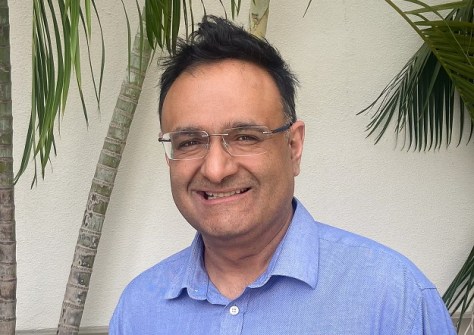
Geoimage has appointed a new Principal Manager, Amal Khatri, who comes to the role with more than 25 years of experience across the energy, space and applied technology sectors. Beginning his career in the energy sector, he later moved into the space sector, where he held senior leadership roles at the South African National Space Agency, including Executive Director of the national Space Program, where he oversaw the space operations, Earth observation, space science and engineering divisions.
On Thursday, 6 March, NGIS and Planet will run a webinar on ‘Leveraging high-frequency satellite imagery for all-hazard resilience,’ which will explore how organisations are moving beyond traditional imagery toward automated analytics. This includes integrating satellite insights into existing disaster management workflows, and exploring how Earth observation technology can be adapted to various geographic and jurisdictional requirements.
And finally for this week, early bird registration for the International Society of Photogrammetry and Remote Sensing’s (ISPRS) XXV Congress — to take place in Toronto, Canada, in July — closes on 2 March. This will be the first ISPRS Congress to be held in Canada since 1972, so no doubt our Canadian friends are very excited about it.
Make sure you don’t miss out any geospatial news from across Australia and around the world — subscribe to our free Spatial Source newsletter, sent out every Wednesday and Friday morning.