Australian navigation system technology company, Advanced Navigation, has had its equipment put to the test during a US Army test.
The company’s ‘inertial-centric intelligent’ assured PNT (APNT) navigation system solution was put through its paces during the US Army’s All-Domain Persistent Experiment (APEX), which simulates GNSS-degraded and -denied conditions.
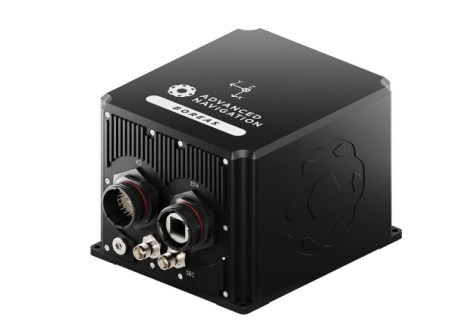
Specifically, Advanced Navigation supplied its Boreas D90 fibre-optic gyroscope (FOG) inertial navigation system (INS), and in separate tests combined it with a laser velocity sensor (LVS) and a wheel-speed encoder.
The Boreas D90 determines true north using gyro-compassing to detect the Earth’s rotation, providing an independent navigation source when external GNSS signals are denied or degraded.
LVS uses an infrared laser sensor to scan the ground to produce a measured ground-relative 3D velocity.
Technology test
The demonstration took place at night at a rural site in New Mexico, during which the organisers subjected participants’ technologies to GNSS jamming produced by sophisticated electronic warfare systems.
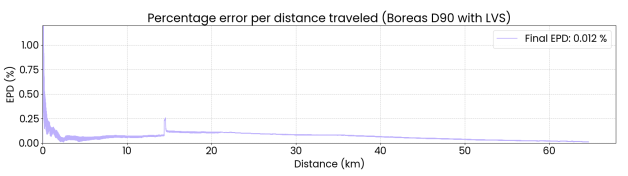
When the Boreas D90 was combined with the LVS, the system demonstrated a dead-reckoning accuracy of 0.012% error per distance travelled (7.5 metres over 65 kilometres) under the contested conditions.

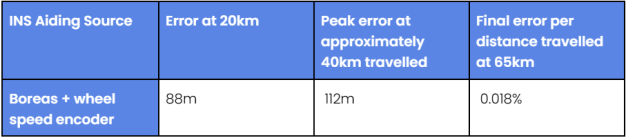
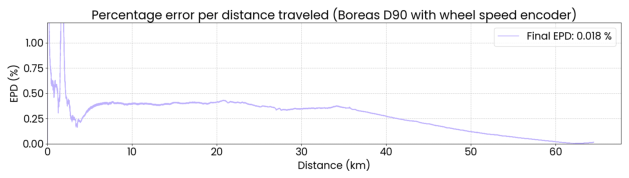
The Boreas D90–wheel encoder combination achieved a 0.018% error per distance travelled (11.7 metres over 65 kilometres), without the need for GNSS, even under considerable jamming.
In charge of it all was Advanced Navigation’s AdNav Intelligence software solution, which dynamically weighs the input from each sensor, making real-time decisions on which sensor to rely on based on reliability scores, environmental conditions, and operational context such as incoming jamming threats.
Mission-critical
According to the company’s CEO, Chris Shaw, “In today’s contested environment, the adversary will deny, degrade, and spoof GNSS signals”.
“Relying on a single technology for navigation is a mission-ending vulnerability,” he added.
“Assured PNT is non-negotiable. The only path to operational advantage is an intelligent, multi-sensor fusion anchored by a resilient inertial core.”
This was Advanced Navigation’s third year of participating in APEX.
Earlier this month, the company appointed Pawel Michalak as its new CTO. Michalak has a PhD in geodesy, and previously was in charge of digital transformation at Fugro.
And in January, it appointed Michelle Toscan to the role of Head of APAC. She had previously held senior roles with Anduril Industries, Google, Leidos and the Royal Australian Navy.
Further reading: