
The Leica Future Forum aims to empower professionals to extend the value of their existing Leica ecosystem by sharing expertise, exploring advanced workflows, and building a community.
The two-day event will feature more than 30 sessions, more than 10 international speakers and more than a dozen exhibitors.
Topics to be covered include:
- BIM for CAD users
- Surveying in an AI-drive world
- GNSS resilience, accuracy and trust
- Practical tunnelling workflows
- Advanced utility detection
- Managing transport project data
- Getting started with laser scanning
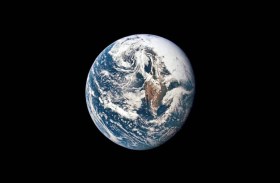
Join experts from artificial intelligence (AI) and data science, thematic applications, engineers and research scientists active in the field of foundation models (FMs) applied to climate, weather, Earth observation (EO), and Earth sciences from across the globe in this workshop hosted by NASA and ESA (European Space Agency).
The Second ESA-NASA International Workshop on AI Foundation Model for Earth Observation will focus on further strengthening cross-agency and cross-disciplinary collaboration between the EO and AI/FM communities to advance the transition of foundation models from research prototypes to operational, trustworthy, and impactful Earth science tools.
The key goal of the workshop is to foster meaningful exchange across science, applications, and operations, while creating space for emerging topics such as agentic AI, novel applications, benchmarking frameworks, and responsible AI use.
Image courtesy NASA
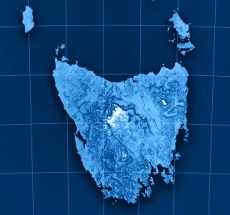
The Tasmanian State of GIS Conference 2026 will be held in Hobart on 3 June.
The Conference will bring together Tasmania’s geospatial community of practitioners, researchers, technologists and decision-makers to share ideas, showcase innovations, and chart the future of spatial thinking.
The theme for this year’s conference is ‘Island to Insight: AI, Analytics and the Digital Landscape,’ reflecting the ongoing convergence of the geospatial sector and the IT world.
Tasmanian geospatial endeavours cover a wide range of activities in sectors such as precision agriculture, forestry management, coastal monitoring, polar science and major infrastructure delivery.
Presentations will cover current and future advanced analytics and AI workflows and how they challenge, compliment or enhance traditional GIS and Earth observation practices.
Image credit: ©iStock.com/FrankRamspott