
Geospatial World Forum (GWF) is a collaborative and interactive event that demonstrates the collective and shared vision of the global geospatial community.
This annual gathering brings together geospatial professionals and leaders representing national mapping agencies, private sector enterprises, multilateral and development organisations, scientific and academic institutions, and large end-users from government agencies and private businesses.
Geospatial World Forum 2026’s theme will be Sovereignty, Economy & Society, and the event is expected to attract:
- 50-plus partners
- 75-plus exhibitors
- 2,000-plus attendees from 100-plus countries
- 500-plus speakers
- Representatives from 1,000-plus organisations
For 2026, GWF returns to the location of its first iteration, the RAI Congress Centre in Amsterdam.
Registrations are open for the 1Spatial World Tour 2026 featuring FME.
The global event series returns for 2026 under the theme of ‘Got You Covered,’ bringing together geospatial professionals, innovators, and industry leaders for a day of insights and connection.
This year’s 1Spatial World Tour will explore how users can achieve complete confidence in their geospatial ecosystem, from data quality and compliance to automation, integration and emerging technologies.
- Hobart – 18 May
- Melbourne – 19 May
- Canberra – 20 May
- Sydney – 21 May
- Brisbane – 22 May
- Adelaide – 25 May
- Perth – 26 May
- Darwin – 28 May
- Singapore – 4 June (TBA)
The event will feature expert presentations, live demonstrations of FME 2026’s newest capabilities, customer success stories and real-world applications, deep dive sessions, Q&A sessions with the 1Spatial technical team, and networking opportunities with peers and product specialists.
There’ll also be giveaways, swag, training vouchers, and a chance to win tickets to LOCATE26 and The Peak of Data & AI 2027 in London!
A major focus of the 2026 tour will be showcasing the latest improvements already released in FME 2026.1, along with a look at what’s coming next under Safe Software’s new quarterly release model.
Recent updates include expanded format support, such as for Microsoft Fabric Data Warehouse, PMTiles, HDF5 Raster, Esri File Geodatabase (OpenFile Geodb), and the technology preview of CityGML 3 — enhancements that strengthen enterprise integration, cloud workflows and 3D capabilities.
Members of the geospatial community, from first-time users to FME gurus, are invited to present a project, workflow or creative use of FME. Abstract submissions can be made here.
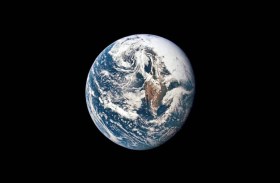
Join experts from artificial intelligence (AI) and data science, thematic applications, engineers and research scientists active in the field of foundation models (FMs) applied to climate, weather, Earth observation (EO), and Earth sciences from across the globe in this workshop hosted by NASA and ESA (European Space Agency).
The Second ESA-NASA International Workshop on AI Foundation Model for Earth Observation will focus on further strengthening cross-agency and cross-disciplinary collaboration between the EO and AI/FM communities to advance the transition of foundation models from research prototypes to operational, trustworthy, and impactful Earth science tools.
The key goal of the workshop is to foster meaningful exchange across science, applications, and operations, while creating space for emerging topics such as agentic AI, novel applications, benchmarking frameworks, and responsible AI use.
Image courtesy NASA

Registration is open for the 2026 GEO Symposium and GEO-21 Plenary, which will take place from 26 to 28 May 2026 in Geneva, Switzerland.
Held under the theme of ‘Investing in Earth Intelligence for a Resilient Future,’ the event will convene governments, space agencies, research organisations, private sector innovators, and development partners to explore how Earth intelligence (EI) can drive transformative, resilient solutions for people and the planet at a pivotal moment in the implementation of GEO’s Post-2025 Strategy.
The sessions will highlight user-driven solutions, open data and open knowledge practices, co-designed products and services, emerging partnerships, and investment opportunities that advance EI and GEO priorities.
The event will be livestreamed, for which registration is not required.

The International Society for Photogrammetry and Remote Sensing’s (ISPRS) XXV Congress will be held in Toronto, Canada, from 4 to 11 July 2026. This will be the first ISPRS Congress to held in Canada since the event in Ottawa in 1972, so it will be an historic occasion.
The event will bring together researchers, practitioners and industry leaders from around the globe to explore the latest advancements, trends and applications in photogrammetry and remote sensing.
The theme of the Congress, From Imagery to Understanding, captures the role of ISPRS and its scientific activities, and will culminate in a legacy project to create materials that can be used by the ISPRS community to better promote to funding agencies and others the important role that it plays in the world’s economic and environmental activities.
The Congress will run in parallel with the 47th Canadian Symposium on Remote Sensing (CSRS).
The abstract submission deadline has been extended to 17 November 2025, and early bird registration is now available.

The Geoscience Australia Distinguished Lecture, “Putting the ‘Geo’ into Geospatial: Shaping the future of Positioning Australia,” will cover future direction of the program, reflecting on its past achievements and how it will meet future positioning demands.
As it moves beyond the establishment phase, the Positioning Australia program will strengthen its capability for continued future relevance. The program builds on opportunities arising from Australia’s geographic location, its technological capabilities, strong partnerships and internationally significant positioning infrastructure.
The adoption of PNT-based technologies is changing requirements for the systems delivering it. There is increasing awareness that society’s increasing reliance on modern technologies brings potential risks from vulnerabilities in PNT systems. This lecture will highlight how Positioning Australia will address these issues, including an often invisible risk: the reliance of PNT systems on a global geodesy supply chain that is increasing vulnerable.
Presented by Dr Martine Woolf, (Branch Head Positioning Australia), Ryan Ruddick (Director GNSS Informatics and infrastructure), Dr Anna Riddell (Director GNSS Analysis), Dr Lisa Hall (Director National Geodesy) and Phil Shears (Director PMO), the lecture will outline how Geoscience Australia aims to continue maximising return on Commonwealth investment in reliable positioning, modernising infrastructure, enhancing access and efficiency, and supporting national resilience and economic growth.
Image credit: ©stock.adobe.com/au/Inna
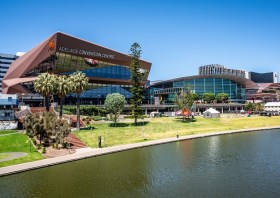
South Australia’s Spatial Information Day (SID) will be held on Friday, 7 August at the Adelaide Convention Centre.
An annual highlight of the South Australian geospatial community’s calendar, SID brings together experts from the fields of surveying, GIS, remote sensing, photogrammetry and more, for wide-ranging discussions and networking.
The theme for 2026 is ‘Every future starts somewhere: From ground truth to space, shaping what comes next,’ and for 2026 the organisers are hoping to attract around 400 delegates and 40 speakers. This year will also see the introduction of the inaugural South Australian EISSI Awards Dinner.
The call for abstracts and papers is now open, with speakers invited to submit their ideas within a wide span of topics, such as:
- Various spatial disciplines, e.g. GIS, surveying and so on;
- Real-world case studies;
- Insights into innovation techniques and approaches;
- Smart cities and infrastructure;
- Emerging technologies.
A sponsorship prospectus is now available, while tickets for the event are expected to go on sale soon.

BIM World COPENHAGEN will be held in Copenhagen, Denmark, from 16 to 17 September 2026, bringing together a wide range of experts from across the fields of digitalisation in construction, real estate and urban development. This includes surveyors, mappers, architects, engineers, contractors, building owners and consultants.
Billing itself as ‘Fuelling the future of the building industry with data and digitalization’, the event will tackle the transformation facing the construction industry, including the pressure to reduce emissions, cut waste and design for circularity, by zooming in on data as the essential link between the green and digital transitions.

LOCATE is Australia and New Zealand’s flagship geospatial event, where the region’s smartest minds meet to explore the technologies, ideas and innovations shaping our world.
Each year, leaders from government, industry, research, and emerging sectors come together to uncover the latest breakthroughs and real-world applications transforming infrastructure, environment, agriculture, energy, mining, emergency response, and urban planning.
If you want to stay ahead of spatial trends, connect with decision-makers, and be part of the conversations driving smarter, data-led futures, this is the place to be.
LOCATE26 will be held at the Melbourne Convention and Exhibition Centre from 24 to 26 November.
Organisers expect at least 1,000 people to attend, making it a not-to-be-missed opportunity for speakers to share their news and views, and for companies and organisations to promote their products and solutions to a prime audience.
Co-located with LOCATE26 will be the 2026 Digital Earth Summit, a major annual global conference of the International Society for Digital Earth (ISDE).
The ISDE has brought together global experts for more than two decades, delivering world-leading summits and symposia across 15 countries. In 2026, the combination of the Summit and LOCATE26 will bring a unique international gathering of scientists, industry innovators, educators and government leaders to Australia.

With a theme of ‘Strengthening and Expanding Geospatial Networks in the Pacific Islands,’ the 2026 Pacific Islands GIS & RS User Conference aims to build and enhance geospatial networks in the Pacific Islands by being a forum where experts, practitioners and policymakers can explore cutting-edge geospatial technologies and collaborations.
The conference is the largest GIS and remote sensing conference attended by Pacific Islanders, attracting more than 300 attendees every year. The event will offer a unique platform to share knowledge, strengthen regional partnerships, and drive innovation in mapping, remote sensing and spatial data infrastructure.