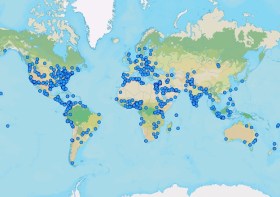
GIS Day is an international day dedicated to showing, teaching and inspiring others. Businesses and organisations are encouraged to host an event to spread enthusiasm and help people learn how to use GIS for themselves — in their work, in their schools or where they volunteer.
The event began in 1999, when Esri’s Jack Dangermond, Dr. Roger Tomlinson, and students celebrated the first GIS Day at Murch Elementary School in Washington, DC.
This year’s theme, ‘Mapping Minds, Shaping the World,’ highlights how GIS technology has changed the way we perceive, navigate and shape our world. It shows how combining human creativity with technology helps us discover hidden trends, support sustainable growth, and make smarter decisions using the power of location data.
At the time of writing (mid-October, 2024), around a dozen events were planned across Australia, New Zealand and the South Pacific. Organisers can register their events on the event website.
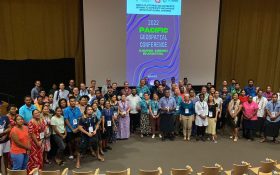
The 2024 Pacific Islands GIS & Remote Sensing Users Conference is reputably the largest GIS and remote sensing conference attended by Pacific Islanders, who leverage this annual opportunity to network and pursue partnerships with practitioners from around the globe.
The conference spotlights the latest innovative technologies, promotes knowledge and capacity development and sharing of best practices, and attracts a gathering of more than 300 attendees.
The theme for the 2024 event will be ‘Sustainable management of coastal areas through remote sensing and GIS.’
GISTAM 2025, the 11th International Conference on Geographical Information Systems Theory, Applications and Management will be a meeting point of researchers and practitioners that address new challenges in geospatial data sensing, observation, representation, processing, visualisation, sharing and management.
This includes all aspects of information communication and technologies as well as management information systems and knowledge-based systems.
The conference will present original contributions of either practical or theoretical nature, including research and applications of specialised or interdisciplinary natures, addressing different aspects of geographic information systems and technologies.
Topics to be covered include:
- Data acquisition and processing
- Remote sensing
- Interaction with spatial-temporal information
- Spatial data mining
- Managing spatial data
- Modelling, representation and visualisation
- GIS and climate change
- Domain applications
Deadlines:
- Regular Paper Submission: 13 December 2024
- Abstracts Track Submission: 30 January 2025

GIScience 2025, the 13th International Conference on Geographic Information Science, will be hosted by the University of Canterbury in collaboration with the GIScience academic research community across New Zealand.
The GIScience conference regularly attracts more than 250 international participants from academia, industry and government to discuss and advance the state-of-the-art in geographic information science.
The first day of the 2025 conference will be dedicated to workshops and tutorials, while the main conference program will run on the second and third days; it will include a single refereed paper track and an abstract track for posters and demo submissions.
GIScience 2025 welcomes papers, posters and demos covering emerging topics and fundamental research findings across all sectors of geographic information science, including (but not limited to) the role of geographic information in geography, computer science, engineering, information science, linguistics, mathematics, cognitive science, philosophy, psychology, social science and geostatistics.
Deadlines:
- Proceedings papers: 31 January 2025
- Workshop proposals: 14 February 2025
- Abstracts: 4 April 2025
- Demos: 4 April 2025
Image credit: ©stock.adobe.com/au/StudioProX

The INTERGEO EXPO and CONFERENCE brings together hundreds of exhibitors and thousands of delegates from around the world, to discuss with, learn from and network with others in the sectors of geodesy, geoinformation and land management.
The event presents an opportunity for vendors to showcase their innovative geodata-based solutions to an international audience over three days, addressing current challenges such as climate change, urbanisation and sustainable land use.
The 2024 event in Stuttgart attracted more than 550 exhibitors and more than 17,000 visitors.
The 2025 Pacific GIS & Remote Sensing User Conference will be held in Suva, Fiji, from 24 to 29 November.
This is the largest annual GIS and remote sensing event held within the Pacific Island community, regularly bringing together more than 300 experts from government, academia and industry for five days of presentations and workshops.
The event will also include nightly social functions that will enable participants to relax and network in informal settings.
The conference is organised by the Pacific GIS and Remote Sensing Council.

Digital Twin | BIM World Paris is a leading event dedicated to digital technology and innovation for buildings, infrastructure and territories. New reorganised, it is to be structured around the pillars of: Smart and safe territories and cities where technologies help improve the living environment, and connected buildings, through the digitalisation of processes, construction tech, AI, BIM, digital twins.
The major themes will be:
- BIM, GIS and interoperability
- Design, construction, building and renovation
- Decarbonisation, energy and sustainable development
- Infrastructure and cities
- Skills and training
- Data, AI and cybersecurity
- Digital twins
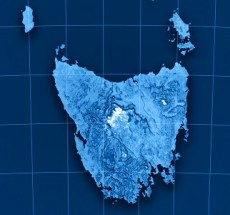
The Tasmanian State of GIS Conference 2026 will be held in Hobart on 3 June.
The Conference will bring together Tasmania’s geospatial community of practitioners, researchers, technologists and decision-makers to share ideas, showcase innovations, and chart the future of spatial thinking.
The theme for this year’s conference is ‘Island to Insight: AI, Analytics and the Digital Landscape,’ reflecting the ongoing convergence of the geospatial sector and the IT world.
Tasmanian geospatial endeavours cover a wide range of activities in sectors such as precision agriculture, forestry management, coastal monitoring, polar science and major infrastructure delivery.
Presentations will cover current and future advanced analytics and AI workflows and how they challenge, compliment or enhance traditional GIS and Earth observation practices.
Image credit: ©iStock.com/FrankRamspott
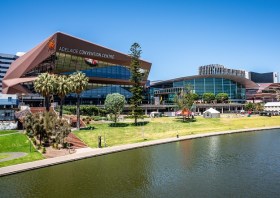
South Australia’s Spatial Information Day (SID) will be held on Friday, 7 August at the Adelaide Convention Centre.
An annual highlight of the South Australian geospatial community’s calendar, SID brings together experts from the fields of surveying, GIS, remote sensing, photogrammetry and more, for wide-ranging discussions and networking.
The theme for 2026 is ‘Every future starts somewhere: From ground truth to space, shaping what comes next,’ and for 2026 the organisers are hoping to attract around 400 delegates and 40 speakers. This year will also see the introduction of the inaugural South Australian EISSI Awards Dinner.
The call for abstracts and papers is now open, with speakers invited to submit their ideas within a wide span of topics, such as:
- Various spatial disciplines, e.g. GIS, surveying and so on;
- Real-world case studies;
- Insights into innovation techniques and approaches;
- Smart cities and infrastructure;
- Emerging technologies.
A sponsorship prospectus is now available, while tickets for the event are expected to go on sale soon.
The Survey and Spatial New Zealand Conference 2026 aims to connect the surveying and spatial community to explore innovation, technology and the future of the profession.
The event will attract professionals from across land development, urban design, resource management, civil engineering, surveying (cadastral, hydrographic and engineering), positioning and measurement, and spatial/GIS for two days of insights.
Registrations are due to open in April 2026.
Image credit: ©stock.adobe.com/au/StudioProX