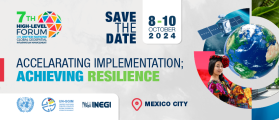
The United Nations Committee of Experts on Global Geospatial Information Management (UN-GGIM), in collaboration with the Government of México through Instituto Nacional de Estadística y Geografía (INEGI) will convene the Seventh High-level Forum on United Nations Global Geospatial Information Management with the theme ‘Accelerating Implementation: Achieving Resilience’.
This seventh edition of UN-GGIM’s High-level Forums will continue UN-GGIM’s regular high-level, multi-stakeholder discussions on global geospatial information management, through the convening of global forums, aimed at promoting comprehensive dialogue among member states, and between member states and relevant international organisations, UN system entities and stakeholders.

FOSS4G Perth is a local, community-driven gathering of the Perth open geospatial community, focused on sharing news of developments in free and open-source software for geospatial applications.
The event will be an opportunity to share ideas about open-source tools, such as QGIS, PostGIS, OpenStreetMap, Sentinel-2 satellite imagery, Python-based Earth observation libraries and frameworks, GDAL, and many others.
This year’s event will be held in conjunction with the ISPRS Technical Commission IV Symposium.
The 2024 FOSS4G Perth organising committee comprises:
- Bryan Boruff – University of Western Australia
- Cholena Smart – Mammoth Geospatial
- Grant Boxer – Consultant Geologist
- Ivana Ivanova – Curtin University
- John Bryant (Chair) – Mammoth Geospatial
- John Duncan – University of Western Australia
- John Lang – Consultant
- Keith Moss – WA Government
- Michel Nzikou – DMN Solutions
- Nimalika Fernando
- Petra Helmholz – Curtin University
- Piers Higgs – Gaia Resources
- Renee Manser
- Stafford Smith
- Tracey Cousens – Mineral Resources Limited
- Vincent Dinh – GIS Pro

In celebration of the International Day of Women and Girls in Science, Earth Observation Australia will conduct a special webinar that will shine a spotlight on the role women play in Earth observation (EO) science and technology.
This webinar will explore the journeys of women who have overcome challenges to lead ground-breaking work in EO science. The session will highlight their achievements, the barriers they’ve faced, and the importance of mentorship and collaboration in empowering the next generation of women scientists. Attendees will gain insights into fostering inclusive networks and strategies to support women in leadership roles within this critical field.
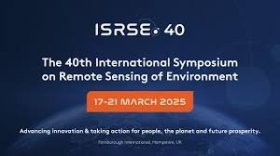
Convened biennially since 1962, the International Symposium on Remote Sensing of Environment is a global summit for experts to share emerging knowledge in the fields of Earth observation and remote sensing.
ISRSE-40 will run alongside the inaugural Farnborough International Space Show.

Held every three years, the European Space Agency (ESA) Living Planet Symposium brings together diverse communities with a common interest in using Earth observation data, in a forum to meet and network with space professionals from a wide range of sectors.
Living Planet Symposium 2025 will have an emphasis on transitioning from ‘Observation to climate action and sustainability for Earth’.
The event will provide a forum to discuss the latest findings and applications based on satellite data, and to review the contribution that data and technologies have made and could further make in addressing environmental and societal challenges.
The symposium will also provide a chance for showcasing innovative products, services, missions and initiatives, with the overarching goal of demonstrating how science, society, policy-making, businesses and the economy can all benefit from observations made from space.
The International Geoscience and Remote Sensing Symposium (IGARSS) is the flagship conference of the IEEE Geoscience and Remote Sensing Society. The 45th IGARSS will be held in Brisbane from 3 to 8 August 2025.
The theme of IGARSS 2025 is ‘One Earth,’ and the symposium will address threats to our Earth and promote collaborative global solutions that use remote sensing technology. The event will have strong technical and social programs, and present opportunities for regional and global collaboration.
Topics to be covered include:
- The contribution of international standards for land cover and land use and guidelines for SDG reporting
- Advanced satellite remote sensing techniques for coastal hazard monitoring and risk prediction
- Advanced signal processing methods for geoscience and remote sensing applications
- Applications of remote sensing in urban climate and sustainability
- Calibration and validation of space-based imaging spectrometers during a growth era of hyperspectral data sources
- Close-range sensing of the environment
- Deep learning and remote sensing for rapid disaster response
- Earth observation foundation models
- Hyperspectral geoscience mapping in developing countries
- New satellite laser data for terrain modelling
- Quantum technology for remote sensing
- Space LiDAR: Missions, technologies, and observations
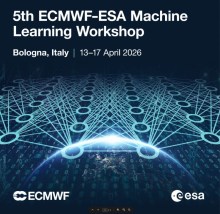
This ECMWF-ESA Machine Learning Workshop aims to explore the fusion of traditional Earth System Observation and Prediction (ESOP) techniques with machine learning (ML) and deep learning (DL) methods.
It seeks to showcase the impact achieved through this fusion, while also addressing the remaining challenges that need further exploration. The presenters will show their contributions to this field and engage the attendees in discussions to provide a comprehensive understanding of the subject. The workshop strongly welcomes industry to demonstrate their commercial lenses for ML4ESOP applications.
This event will delve into the transformative role of ML in enhancing data analysis and predictive modelling within atmospheric sciences. Participants will engage with leading experts, partake in hands-on sessions, and explore cutting-edge innovations that are shaping the future of climate research and operational forecasting.

IPTSAT will host a webinar on ‘Copernicus for Smart Cities: Using Satellite Data to Support Urban Decisions’. The event is designed for public administration technicians, urban planners and professionals interested in leveraging satellite data for land-use planning.
In the webinar, IPTSAT experts will demonstrate how to access Copernicus data and apply it to urban planning. Participants will learn how to
- Access satellite data from the Copernicus program
- Find and download Sentinel imagery
- Explore data using online tools
- Integrate satellite data into GIS software
- Use data for environmental and urban analysis
Tools to be featured include the Copernicus Data Space Ecosystem, the Copernicus Browser, and QGIS integration via openEO (including short practical demonstrations on how to get started).
Real-world examples of satellite data for urban monitoring will be explored, such as urban heat islands; urban greenery distribution and health monitoring; land consumption, tracking soil sealing and urban growth; and water quality monitoring.
Image credit: ©stock.adobe.com/au/Inna
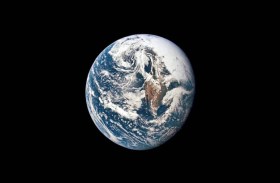
Join experts from artificial intelligence (AI) and data science, thematic applications, engineers and research scientists active in the field of foundation models (FMs) applied to climate, weather, Earth observation (EO), and Earth sciences from across the globe in this workshop hosted by NASA and ESA (European Space Agency).
The Second ESA-NASA International Workshop on AI Foundation Model for Earth Observation will focus on further strengthening cross-agency and cross-disciplinary collaboration between the EO and AI/FM communities to advance the transition of foundation models from research prototypes to operational, trustworthy, and impactful Earth science tools.
The key goal of the workshop is to foster meaningful exchange across science, applications, and operations, while creating space for emerging topics such as agentic AI, novel applications, benchmarking frameworks, and responsible AI use.
Image courtesy NASA
The 2026 Advancing Earth Observation Forum aims to bring together professionals from across Australia and beyond, to share, learn, connect and collaborate.
The four-day event promises to attract a diverse range of participants from the Earth observation community, including those in industry, government, research, defence, not-for-profits and educational institutions.
The 2026 Forum will build on the momentum generated at the 2024 event in Adelaide and the inaugural AEO Forum held in Brisbane in 2022.