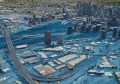
A $15 million project to develop a National Digital Twin for Australian Agriculture has been launched by the new Australasian Space Innovation Institute (ASII).
The aim of the project is to develop a nationwide, AI-enabled virtual copy of Australia’s agricultural landscape, in the hope that it can be used to boost productivity, sustainability and resilience in the ag sector.
This includes farming, forestry and fisheries.
The initiative is being supported by Elders, Meat & Livestock Australia and Charles Sturt University (CSU).
The establishment of the ASII was announced at the International Astronautical Congress in Sydney in October last year.
The National Digital Twin is one of four projects the ASII will initially tackle, the others being a Regional Space-Based Surveillance initiative, a Digital Infrastructure for Disaster Management program, and a Space-Enabled Digital Innovation for Regional and Remote Community Resilience program that will integrate satellite communications, Earth observation, GNSS and IoT systems.
A national resource
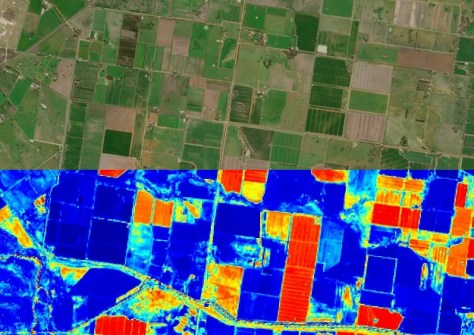
The National Digital Twin will integrate data from satellite Earth observation and IoT/sensor sources, as well as weather, soil and water data and farm system models.
The result should be a virtual replica of Australia’s agricultural ecosystem.
AI-enabled capabilities will support predictive modelling for climate resilience, biosecurity, water management and productivity.
“Australia has world-class agricultural, forestry and fisheries capability, but we lack a shared national capability to turn that strength into decision-ready insight at scale,” said Professor Andy Koronios, founding CEO and Managing Director of ASII.
“The National Digital Twin provides that missing layer: a sovereign, AI-enabled environment where Australia can model scenarios, test outcomes, and make better decisions across productivity, resilience and policy.
“It is a national infrastructure for public good, best stewarded by an independent, not-for-profit institute like the ASII, for the benefit of the nation.”
Data for harvesting
According to Mick Crowley, Managing Director of Meat & Livestock Australia, the Digital Twin will provide the ability to test different livestock management options and refine trials before practises are adopted for larger-scale trials or commercialisation.
“Done well, this approach can save millions of dollars and years of research time compared with traditional methods, while lifting confidence in what we deploy at scale,” he said.
Professor Renée Leon, Vice Chancellor of CSU, said that the Australian Agricultural Data Exchange at CSU is already bringing together the kind of agricultural data that will be needed for the digital twin, meaning “they will jointly operate to transform Australia’s fragmented datasets into scalable, trusted outcomes for research, industry, and policy”.
“This will equip our experts with the necessary information and linked data they need to carry out more effective experimentation, test hypotheses, and refine trials,” he said.
“The National Digital Twin … [will give] … agronomists, advisors and agtech providers access to trusted, nationally consistent intelligence and a powerful environment to test and refine ideas before they reach the paddock,” added Mark Allison, Managing Director and CEO of Elders and board member of the ASII.
“It aims to strengthen the advice that can be provided, while keeping relationships and judgement firmly with the advisor.”